
More and more brands are adopting a DTC model, presenting rightholders with the perfect opportunity to approach brands in the DTC, or direct to consumer, sector about sponsorship.
A recent survey from Manifesto Growth Architects found that 70% of decision-makers within businesses believe that memberships and subscriptions are a key to growth. This is hardly surprising considering lockdowns have seen consumers turn to deliveries for everything, and many are finding that subscriptions can be convenient to minimise spending.
DTC brands are expanding their offerings to include subscriptions, while existing subscription companies are marketing discounts to try and maximise exposure. While some of the world’s largest legacy brands have had to completely rethink their business models to incorporate DTC, more niche brands have been able to provide unique products and services without the overheads of a physical location and longer supply chain.
For rights holders, this means there are more brands to engage and there are more doing well financially despite the disruption caused by COVID-19. The increasingly saturated market means sponsorship can provide a compelling story about how to generate better brand awareness and preference among consumers, particularly over competitors.
If you’re interested in contacting such brands and being seen as a thoughtful and relevant partner, we have a report containing contact details for the key decision-makers at 23 DTC brands worth approaching now. Below, we have curated some examples of brands in several industries that are benefitting from utilising a DTC model.
What sectors are going big on DTC?

With the likes of Stitch Fix and Fabletics, consumers can get overcoats, underwear, and everything in between tailored specifically to their style straight to their door without much effort. Therefore, understandably, apparel brands who have physical stores are shifting their focus onto their DTC capabilities. As evidenced above, Nike have succeeded in their efforts to push DTC, and in March, Adidas released a new strategic growth plan which called for direct-to-consumer sales to make up 50% of revenue by 2025.

According to emarketer, the food and beverage DTC space is set to grow by 21% by the end of 2021. Again, we’re seeing household names begin to move into this space, like Heinz, but there are more newcomers entering the game every month with innovative ways to fill gaps in the market. For example, On The Table, a London based meal kit start-up, is set to allow customers to pay for their kits in cryptocurrency, making them the first in this sector to do so.

While gyms and fitness centres were closed during lockdown, many people turned to DTC fitness alternatives, like Peloton or Zwift. Research shows that 60% of people plan on cancelling their gym membership even after lockdowns end, which is expected to transfer over £7 billion in annual revenue from gyms to at-home exercise solutions. In an effort to retain customers, many gyms provided virtual and on-demand classes during lockdowns, and even brands whose core focus isn’t fitness, like Nike, Apple, and Lululemon, started offering subscription-based home fitness apps.

Volvo’s commercial strategy will see them invest heavily in online sales channels, stating all future electric car ranges will be available exclusively through online channels. The company’s subscription service, Care by Volvo, will be expanded into a broader customer offer aimed at increasing confidence in the brand and its products. For consumers who prefer to buy used cars, the two-pronged challenge of lockdowns and the likes of cinch and Cazoo has led a lot of traditional auto dealers to move to a hybrid platform, offering the sale of cars online with home delivery as well as providing an in-person service.
P.S., we have a whole other report containing information on the Top 100 Car Dealerships if you’re interested.

The launch of No7beauty.co.uk marked “a significant step” in the brand’s ambition to provide more personalised experiences for its customers. The brand has gone far beyond a simple DTC model, however, offering a wide range of new tools and information for beauty shoppers, including multimedia educational videos, tutorials and virtual consultations. As well as DTC beauty brands offering subscription models and/or online-only shopping, established brands that have historically been in stores are moving into the online space to remain relevant and cater to different audiences, making this market ripe with potential for rights holders.
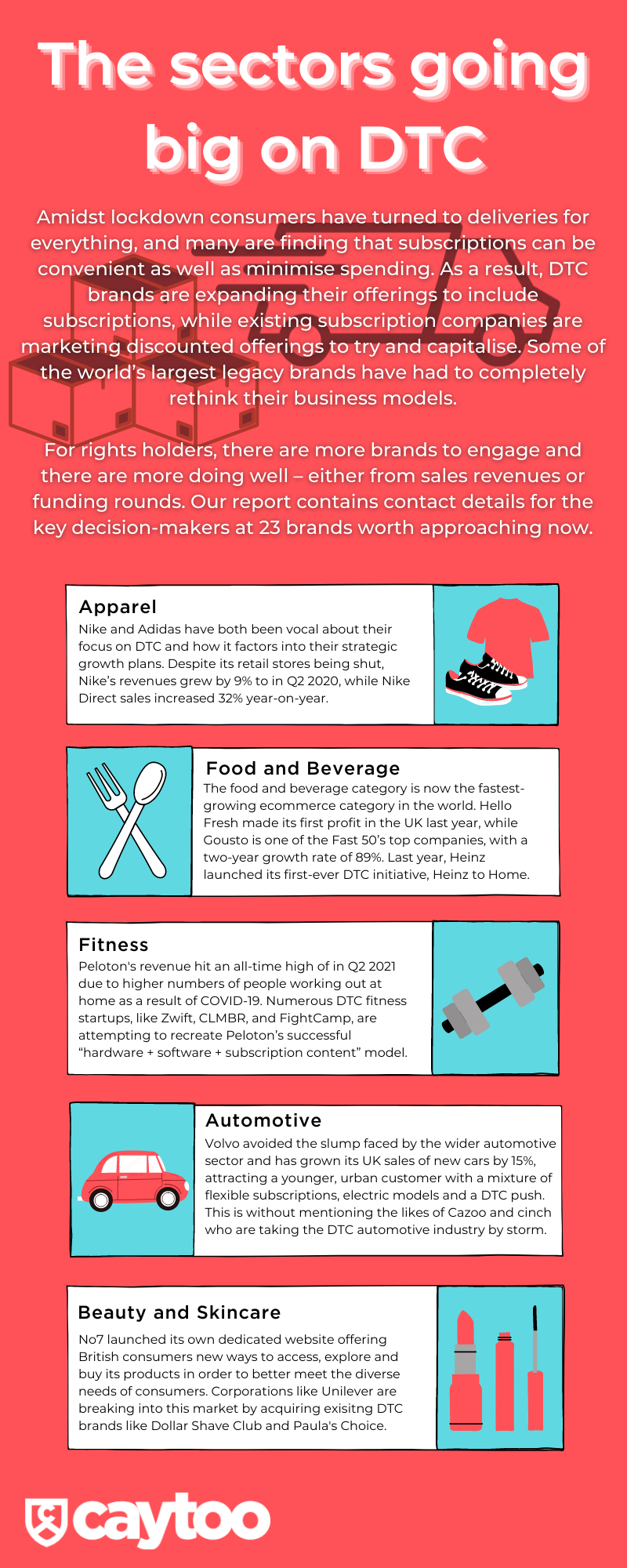 You can view our full infographic here.
Now that you’ve seen the potential of partnering with DTC brands, why not check out our report to see which 23 brands we’ve identified for you.
Want to engage DTC subscription brands?
Our DTC Subscription Brands report includes 23 companies in the space worth approaching as potential sponsors.


